
What Is the Double Empathy Problem in Autism? A Guide for Parents
If your young person has ever been told they "lack empathy" or "just don't get" other people, you'll know how much that can sting – for them and for you. Most parents can see their young person cares deeply. So why do so many conversations still go wrong?
One idea has changed how many families, researchers and autistic adults think about this question. It's called the double empathy problem, and it's well worth understanding.
What is the double empathy problem in autism?
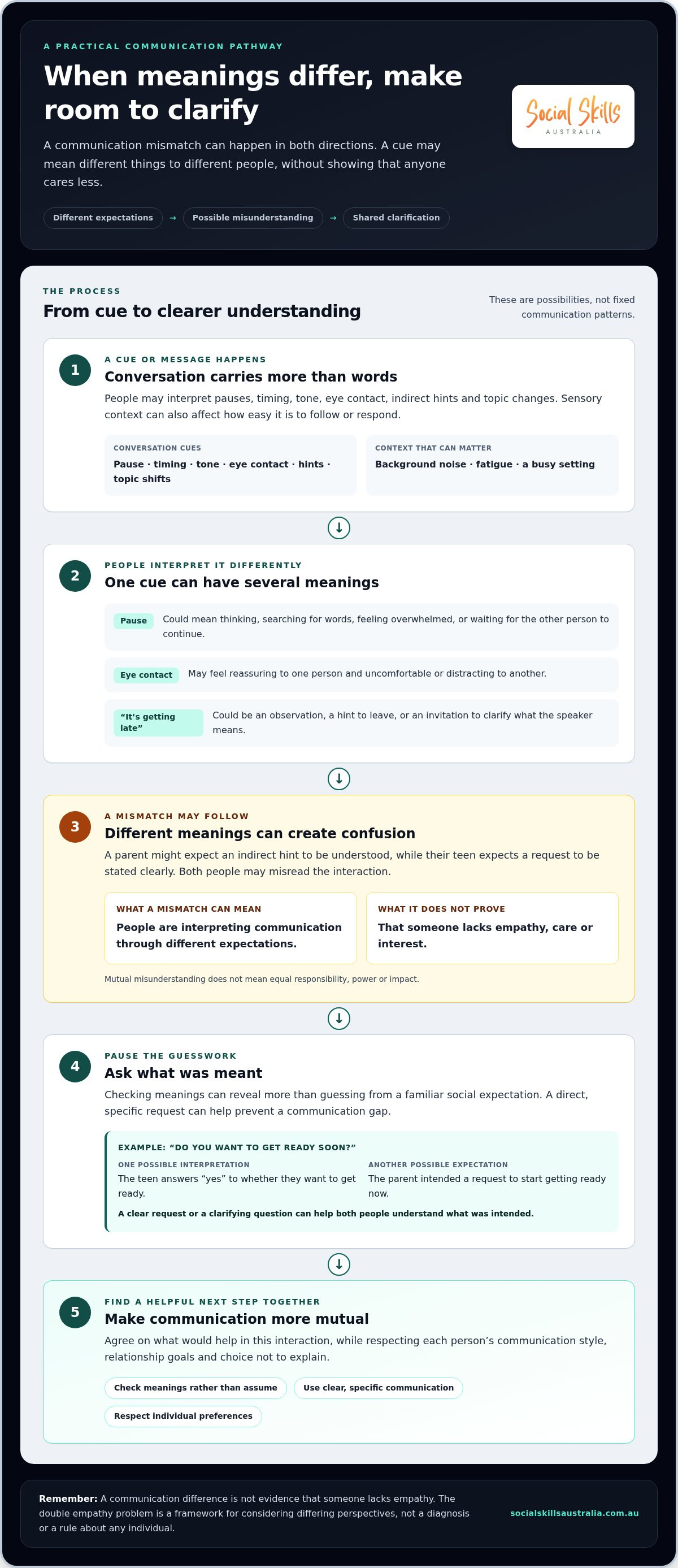
The double empathy problem is the idea that misunderstandings between autistic and non-autistic people run in both directions. When communication breaks down, it isn't simply because the autistic person has missed something. Both people are reading the situation through their own expectations – and those expectations can be quite different.
The term was introduced in 2012 by autistic researcher Damian Milton, in a paper published in the journal Disability & Society. His point was simple but important. For a long time, social difficulties were described as something located entirely inside the autistic person. Milton argued that it's a two-way gap: non-autistic people often find it just as hard to read autistic people as the other way around. They just rarely get labelled for it.
That doesn't mean autistic people never find social situations hard. Many do, and that's real. It means the difficulty belongs to the interaction, not to one person.
What does the research show?
The idea has since been tested. In a 2020 study published in the journal Autism, Catherine Crompton and colleagues asked people to pass a story along a chain, one person to the next. Information passed between autistic people was shared just as accurately as between non-autistic people. The most detail was lost in mixed chains, where autistic and non-autistic people were passing the story to each other.
In other words, the autistic participants weren't poor communicators. The breakdown happened where two different communication styles met.
For parents, that's a reassuring finding. It suggests a lot of everyday friction comes from mismatched expectations – and mismatched expectations can be understood and worked with.
What it looks like at home
You've probably seen the double empathy problem play out without having a name for it.
Your teen replies "okay" to a text and then goes quiet. You read it as annoyed or dismissive. They meant "got it" and didn't think anything more was needed.
You ask, "Do you want to start getting ready soon?" You meant "please get ready now." They heard a genuine question about what they'd like, answered "yes", and kept doing what they were doing.
Neither person did anything wrong. Each was communicating in a way that made perfect sense to them. The problem sat in the space between.
The same thing happens with eye contact, pauses, tone of voice and hints. A pause might mean someone is thinking, not that they're uninterested. Looking away might help someone concentrate rather than signal rudeness. "It's getting late" might be a hint to leave – or just an observation.
How families can close the gap
The good news is that once you know the gap exists, there's a lot you can do about it – from both sides.
Say what you mean. Swap hints for clear, specific requests: "Please get ready now – we're leaving in ten minutes." It isn't blunt. It's clear, and clear is kind.
Check before you assume. If a reply feels off, ask rather than guess: "I read that as you being annoyed – is that right?" Often the answer is a surprised "no".
Ask about preferences. Some young people prefer a question in writing, or time to think before answering. Ask what works for them, and expect it might change from one situation to the next.
Mind the setting. Noise, tiredness and time pressure make it harder for anyone to communicate. A tricky conversation often goes better in the car or on a walk than across the dinner table at the end of a long day.
Repair, don't blame. When something goes wrong, try: "I think we understood that differently. Can we start again?" That models exactly the kind of two-way repair the double empathy problem points to.
So where do social skills fit in?
If misunderstandings run both ways, parents sometimes ask us whether social skills programs put the whole burden on the young person. It's a fair question, and we take it seriously.
Here's how we see it. Social skills aren't about changing who a young person is or teaching them to mask. They're tools. Many of the young people we work with want friends but don't know where to start – and vague advice like "just be yourself" doesn't help. Clear, explicit teaching of how conversations and friendships tend to work gives them options they can choose to use, in the relationships that matter to them.
The double empathy problem is also part of why parents are involved in our program. In PEERS®, every young person has a social coach – usually a parent – who learns the very same skills. That means the people closest to your young person are learning a shared language too. It isn't one person doing all the adapting; it's both sides building understanding together.
Our groups also bring young people together with neurodivergent peers. As the research suggests, that can be a much easier place to practise and connect.
Frequently asked questions
Does the double empathy problem mean autistic people lack empathy?
No – it challenges that old idea. Autistic people can care deeply about others while reading or expressing feelings differently. A communication mismatch says nothing about how much someone cares.
Does it mean autistic people always understand each other?
No. Autistic people are as different from one another as anyone else. The research shows a pattern across groups, not a rule for every pair of people.
Is the double empathy problem a diagnosis?
No. It's a way of understanding communication between people, not a label for an individual.
Thinking about next steps?
If you'd like to talk through how our program could work for your young person – and what being their social coach would look like for you – we'd love to have a relaxed, no-pressure chat.
Book a free Discovery Call – enrolments are open for our January 2027 intake.
Article by
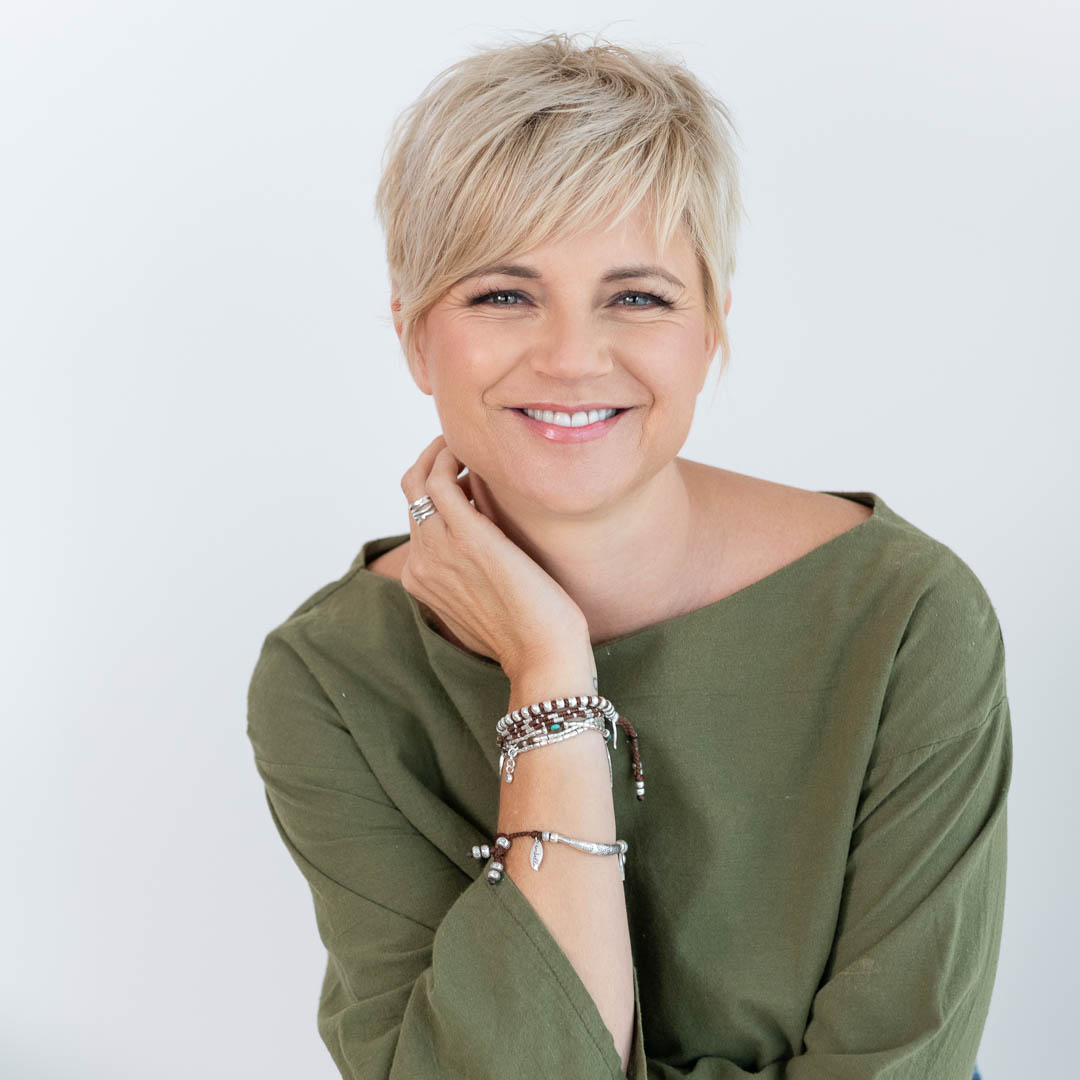
Christine O'Leary
Christine O'Leary is the founder of Social Skills Australia, a Social Communication Educator and a UCLA PEERS® Certified Provider. She brings more than 28 years of communication experience across education, parenting support and consulting, and holds a Graduate Diploma in Communication and a Bachelor of Business Administration from the University of South Australia.
Christine first discovered PEERS® as a parent, when her own son wanted help making friends, and completed the program alongside him. That experience led her to become certified in 2022. Today she and her team deliver evidence-based social skills programs online across Australia for neurodivergent teens and young adults, and have supported hundreds of participants and their families.
Her approach is neuroaffirming and practical: social challenges are skill gaps, not character flaws, and the right skills can be learned.