
Has your teenager basically downed tools on therapy? The occupational therapist, the psychologist, the speech therapist - appointments they used to go to without much fuss, and now they’re just… done. If that sounds familiar, take a breath. It’s completely normal - and it might even be a good sign.
I’m Chris, a certified PEERS® provider, the founder of Social Skills Australia, and a parent of teens myself. This comes up all the time when I talk with parents, so let me explain why it happens - and what tends to help once a teen reaches this stage.
Why teens disengage from one-on-one therapy
By the time they’re teenagers, a lot of kids have been in one-on-one therapy for years - OTs, psychologists, speech therapists, you name it. Quite simply, they’re tired of it. And developmentally, that makes complete sense.
Teenagers are wired to turn towards their peers. They don’t want to be singled out, pulled out of class, or feel like they’re being ‘worked on.’ Sitting one-on-one with an adult who’s focused on fixing something can start to feel like a quiet message that there’s something wrong with them. So they pull back. That’s not your teen being difficult, and it’s not a failure on anyone’s part - it’s a very normal stage of growing up.
When parents tell me this on a call, I always say the same thing: yep, that’s typical. One-on-one support was often exactly right for the younger years. But teens are in a different place now - friendships and peers have become their whole world.
Why group learning fits teenagers better
This is actually one of the biggest reasons we teach in groups rather than one-on-one. For this age, learning alongside other teens works with their development instead of against it:
Teens are far more motivated to learn social skills alongside peers than one-on-one with an adult.
It doesn’t feel like therapy - it feels like being part of a group of people who just get it.
They take things in better from watching other teens and learning together than from being told by a grown-up.
And the skills are for the real world - friendships - so practising with actual peers is where it finally clicks.
In a group, a teen isn’t the one with the ‘problem’ being fixed in a quiet room. They’re one of several young people learning the same things together - which is far less stigmatising, and far more motivating.
This isn’t ‘anti-therapy’
One important thing to be clear about: none of this means one-on-one therapy is bad, or that your teen should stop everything. Individual therapy has enormous value, especially in the younger years and for specific, individual goals - and for some needs it’s essential. The point isn’t one versus the other. It’s about matching the approach to where your teen is now. Sometimes, by the teen years, a group is simply the better fit for building social confidence.
Where to start
If your teen has quietly closed the door on one-on-one sessions, it may not mean they’re done growing - just that they’re ready for a different way of learning:
Download our free guide, 5 Steps to Making and Keeping Friends.
Book a free chat with me to talk through whether a group would suit your teen.
Being over one-on-one therapy doesn’t mean your teen is done growing. It might just mean they’re ready to learn with their peers, not in a room being worked on.
Frequently Asked Questions
My teenager refuses to go to therapy - is that normal?
Very. By the teen years, many young people have had years of one-on-one support and are simply over it. Teens are drawn to their peers and dislike feeling singled out, so disengaging from individual sessions is a common, developmentally normal stage.
Should I force my teen to keep going to their psychologist or OT?
Forcing it rarely helps and can increase resistance. It’s usually more productive to understand why they’ve disengaged and consider whether a different approach - such as a peer group - might suit this stage better. Individual therapy still has real value; it’s about the right fit.
Why would a group work when one-on-one didn’t?
Because teens are motivated by their peers. In a group, learning social skills doesn’t feel like being fixed - it feels like belonging. They learn from watching others, and they practise with the very people the skills are for.
Social Skills Australia delivers UCLA’s evidence-based PEERS® program online for teens and young adults with autism and ADHD across Australia.
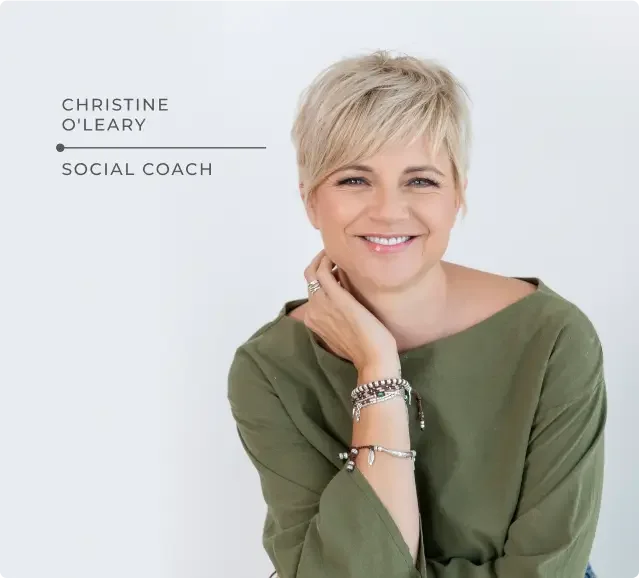
Article by
Christine O'Leary
Christine O'Leary is the founder of Social Skills Australia, a Social Communication Educator and a UCLA PEERS® Certified Provider. She brings more than 28 years of communication experience across education, parenting support and consulting, and holds a Graduate Diploma in Communication and a Bachelor of Business Administration from the University of South Australia.
Christine first discovered PEERS® as a parent, when her own son wanted help making friends, and completed the program alongside him. That experience led her to become certified in 2022. Today she and her team deliver evidence-based social skills programs online across Australia for neurodivergent teens and young adults, and have supported hundreds of participants and their families.
Her approach is neuroaffirming and practical: social challenges are skill gaps, not character flaws, and the right skills can be learned.